3D ASCII Cyberpunk City Demo Launches in Browser Powered by 283KB Engine
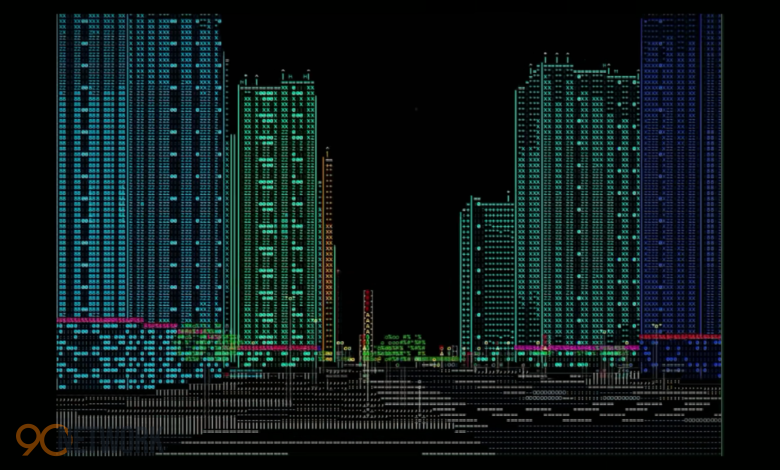
Solo developer Grow Now! Games has published a playable ASCII cyberpunk city demo directly accessible inside standard web browsers. The walkable text-based metropolis showcases how modern web technologies can render complex 3D environments with minimal system overhead. Running on a lightweight 283KB engine built with Rust and WebAssembly, the project uses WebGL shaders to transform retro text characters into an immersive urban landscape.
How the ASCII Cyberpunk City Demo Works Under the Hood
The interactive showcase relies on an optimized execution stack to deliver a smooth 3D experience without demanding massive file downloads. By writing the core logic in Rust and compiling it to WebAssembly (Wasm), the developer achieves high performance inside standard web browsers. The 283KB Wasm binary manages environmental logic, movement, and character layout before feeding spatial data to a WebGL renderer.
WebGL shaders then take those character matrices and render them in three-dimensional space. Rather than loading dense polygon meshes or high-resolution textures, the engine converts raw text typography into dynamic visual geometry. As a result, the ASCII cyberpunk city demo builds detailed skyscrapers, glowing signs, and streetscapes strictly through formatted text characters.
The Appeal of WebAssembly and Lightweight Graphics
This technical experiment highlights how web technologies can bypass traditional software weight. Modern video game downloads frequently require tens of gigabytes of storage space. In contrast, a micro-sized engine demonstrates that clever architectural choices can yield unique visual styles with virtually instant load times.
- Compact Payload: The total engine binary takes up only 283KB, allowing near-instant execution over normal internet connections.
- Rust and WebAssembly Pipeline: Rust delivers high computation speeds and memory safety, while WebAssembly runs near native speeds inside browser engines.
- Shader-Based Rendering: Hardware acceleration maps simple characters into dramatic depth and perspective without relying on conventional art assets.
Although the project is primarily a creative tech prototype, it provides a compelling blueprint for indie browser games. By eliminating heavy engine bloat, web-native tools offer artists a flexible path to create expressive, highly accessible virtual worlds.
For related coverage, browse our WebAssembly browser performance.