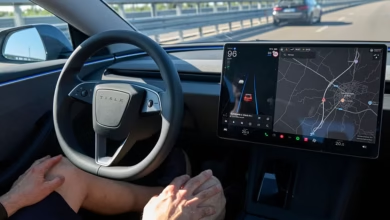
Automotive RAM Demand Surges as Future Cars May Need 300GB Memory

The conversation around automotive RAM demand is shifting rapidly as next-generation vehicles are expected to require dramatically more memory potentially up to 300GB per car. This projection highlights a major in the automotive and semiconductor industries, where vehicles are evolving into highly sophisticated computing platforms on wheels.
As cars become smarter, more connected, and increasingly autonomous, memory is no longer a minor component. Instead, it is becoming a critical resource that could reshape global supply chains and drive long-term growth in the chip industry.
Why Automotive RAM Demand Is Increasing
Modern vehicles are no longer just mechanical machines. They are complex digital systems packed with sensors, processors, and software.
The rise in automotive RAM demand is driven by several key factors:
- Advanced driver-assistance systems (ADAS)
- Autonomous driving capabilities
- High-resolution infotainment systems
- Real-time data processing from multiple sensors
- Over-the-air software updates
Each of these features requires significant memory to operate efficiently and reliably.
The Shift Toward Software-Defined Vehicles
Cars Are Becoming Data Centers on Wheels
One of the biggest reasons behind growing automotive RAM demand is the shift toward software-defined vehicles. Instead of relying solely on hardware, modern cars depend heavily on software to control functions, deliver features, and improve performance over time.
This transformation means:
- Continuous software updates
- More complex operating systems
- Increased reliance on AI and machine learning
- Greater need for data storage and processing
As a result, memory requirements are increasing at an unprecedented pace.
Why Future Cars Could Need 300GB of RAM
Massive Data Processing Requirements
Future vehicles, especially those aiming for higher levels of autonomy, must process enormous amounts of data in real time.
Sources of this data include:
- Cameras capturing high-resolution video
- Radar and lidar sensors
- Navigation systems
- In-car entertainment platforms
Handling this data efficiently requires large amounts of RAM to ensure smooth performance without delays.
Advanced Driver Assistance and Autonomous Driving
Memory as a Core Component
ADAS and autonomous driving systems are among the biggest contributors to rising automotive RAM demand.
These systems rely on:
- Real-time object detection
- Path planning algorithms
- Sensor fusion from multiple inputs
- Continuous environmental analysis
All of these processes are memory-intensive and require fast, reliable RAM to function safely.
Infotainment Systems Are Getting More Demanding
Entertainment Meets High Performance
Modern infotainment systems are no longer basic screens they now offer:
- Streaming services
- Gaming capabilities
- Multi-display setups
- Voice assistants
These features significantly increase memory requirements, further driving automotive RAM demand.
Impact on the Semiconductor Industry
A New Growth Opportunity
The surge in automotive RAM demand presents a major opportunity for semiconductor manufacturers. As vehicles require more memory, chipmakers can expect sustained growth in this sector.
Key impacts include:
- Increased production of automotive-grade memory
- Higher demand for advanced DRAM technologies
- Expansion of supply chains to support automotive clients
This shift could help offset fluctuations in other markets like consumer electronics.
Potential Supply Challenges
Could Memory Shortages Worsen?
While demand growth is positive for manufacturers, it may also create challenges.
Rising automotive RAM demand could lead to:
- Increased competition for memory supply
- Pressure on existing production capacity
- Potential shortages affecting other industries
If automotive demand grows faster than supply, it could impact pricing and availability across multiple sectors.
Long-Term Outlook for Automotive Memory
Strong Growth Ahead
Despite potential challenges, the long-term outlook for automotive RAM demand remains highly positive.
Factors supporting growth include:
- Continued adoption of electric vehicles
- Expansion of autonomous driving technologies
- Increasing digitalization of vehicle systems
- Consumer demand for smarter, connected cars
These trends suggest that memory will play an even larger role in future vehicles.
How Automakers Are Preparing
Investing in Next-Gen Architecture
Automakers are already adapting to rising memory needs by:
- Designing centralized computing systems
- Partnering with semiconductor companies
- Investing in AI-driven vehicle platforms
- Developing scalable software architectures
These efforts aim to ensure vehicles can handle growing data and processing requirements.
What This Means for Consumers
Smarter Cars, Better Experiences
For consumers, increased automotive RAM demand translates into:
- Faster and more responsive vehicle systems
- Improved safety through advanced driver assistance
- Enhanced entertainment options
- Continuous feature updates over time
In short, more memory enables a better overall driving experience.
The Bigger Picture: Cars as Technology Platforms
The rise in automotive RAM demand reflects a broader تحول in how vehicles are designed and perceived. Cars are no longer just transportation tools they are becoming fully integrated technology platforms.
This shift blurs the line between automotive and consumer electronics, creating new opportunities and challenges for both industries.
Final Thoughts
The rapid growth in automotive RAM demand signals a fundamental change in the automotive landscape. With future vehicles potentially requiring up to 300GB of memory, the importance of RAM is reaching new heights.
While this trend presents challenges for supply chains, it also opens the door for innovation and long-term industry growth. As cars continue to evolve into intelligent, connected systems, memory will remain at the heart of this transformation.
For both manufacturers and consumers, the future of driving is increasingly defined by computing power and RAM is a key part of that equation.