Opera GX Lands on Linux, Expanding Its Gaming Browser Ambitions
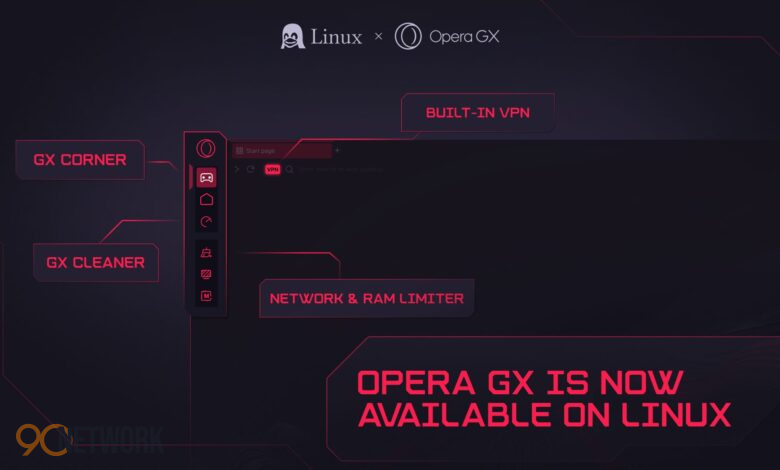
Opera GX on Linux is now officially available, giving Linux users native access to Opera’s gaming-focused browser after years of requests from communities on Reddit, Discord, and Linux forums. Opera says the release is aimed at gamers, developers, and power users who want tighter control over system resources, stronger personalization, and built-in privacy features without leaving their preferred platform.
The launch is notable because Opera GX has spent years building a distinct identity around performance controls and an aggressively customizable look, but Linux users had been left out of that experience. With this release, Opera is trying to meet growing demand from a segment of PC users that values both flexibility and system efficiency.
Opera originally launched GX in 2019, and Tom’s Hardware reports that Opera says the browser has grown to more than 34 million users worldwide. Bringing it to Linux is less about a symbolic checkbox and more about widening the reach of a browser brand that has been marketed as a tailored environment for gaming, streaming, and heavy multitasking.
Why this launch matters
Linux is no longer an afterthought in PC gaming conversations. Between the Steam Deck, Proton, and broader interest in alternatives to Windows, more gamers and tinkerers are comfortable running Linux full-time or at least part-time. Opera is clearly trying to capitalize on that shift by offering a browser that fits the same control-first mindset many Linux users already bring to their systems.
That positioning makes sense. Linux users often care deeply about how software behaves under load, how much memory it consumes, and how much freedom they have to tune the experience. Opera’s pitch is that GX is not just available on Linux, but that its core philosophy already aligns with what Linux users tend to want: granular control, visual customization, and privacy-focused browsing.
The company is also signaling that this is not a one-off port. Opera says it has a dedicated team working on the Linux version, with plans for bug fixes, quality-of-life updates, and regular release cycles. That matters because Linux users are often skeptical of software launches that arrive with fanfare but receive weak long-term support afterward.
What users get with Opera GX on Linux
At the center of the browser’s appeal is its resource management toolkit. Opera says GX Control lets users limit RAM and network usage so the browser does not eat into game performance, and it also includes a Hot Tabs Killer designed to identify and cut down heavy tabs. Tom’s Hardware additionally notes CPU controls as part of GX’s performance-focused feature set.
That resource-first approach is one of the reasons Opera GX built a following on other platforms. Many gamers keep Discord, streams, guides, music, and multiple tabs open while playing, and traditional browsers are often blamed for chewing through memory in the background. Opera GX is designed to turn that pain point into a selling point.
The Linux version also includes many of the extras that made GX stand out elsewhere. Opera highlights sidebar integrations for Discord and Twitch, while its product page lists built-in ad blocking, a free VPN, force dark mode, a release calendar, design customization tools, and floating window support. Tom’s Hardware adds that the sidebar can also surface ChatGPT access, reinforcing the browser’s broader “everything in one place” strategy.
For users, that means Opera GX is not merely trying to be a browser with a gaming skin. It is being positioned as a compact control center for browsing, chatting, streaming, and jumping between entertainment tools without constant tab switching.
Customization is a major part of the pitch
Opera GX has always leaned hard into aesthetics, and that remains a major part of the Linux release. Opera says users can change themes, sounds, shaders, icons, sidebar layouts, speed dial designs, startup animations, and other interface elements. It also points to the GX Store, where users can download from a library of more than 10,000 preset mods.
That feature set fits naturally with Linux culture, where personalization is often part of the appeal of the operating system itself. For many users, customizing a desktop environment, terminal, launcher, or workflow is not a fringe hobby but part of daily computing. Opera appears to understand that and is leaning into it.
There is also a practical side to this approach. A heavily customizable browser can appeal not only to gamers chasing a particular look, but to developers and creators who want a workspace that feels visually organized around their own habits. In that sense, Opera GX on Linux may find a wider audience than its marketing suggests.
Privacy and security could help Opera win attention
Opera is also making privacy a core part of its Linux messaging. In its launch material, the company says the browser comes with built-in ad and tracker blocking, a zero-log VPN that it says has been independently audited, and data-handling practices shaped by European privacy rules. Opera further says it does not collect browsing history, location data, or search queries, and Tom’s Hardware reports that the company also says it does not collect page content or information typed into forms.
That emphasis is strategic. Linux users often have sharper-than-average expectations around transparency, tracking, and user control. While Opera GX remains proprietary software, Opera is trying to reassure privacy-conscious users that the browser’s default posture is more restrained than many people expect from mainstream consumer software.
Still, privacy alone may not settle every debate. Some Linux users prefer open-source browsers on principle, and Opera GX will not automatically win over that crowd. But for users who care more about convenience and built-in tools than licensing philosophy, Opera’s privacy bundle could make the browser more attractive than a standard Chromium install loaded up with extensions.
Installation details and current limitations
Opera GX on Linux is launching with support for Debian-, Ubuntu-, Fedora-, and openSUSE-based distributions. The browser is currently available through .deb and .rpm packages, while Opera says a Flatpak version is in active development.
That package support should cover a large share of Linux desktop users at launch, though the missing Flatpak option may be a small disappointment for people who prefer sandboxed, cross-distro app delivery. The good news for those users is that Opera is at least publicly acknowledging Flatpak work rather than leaving the question open-ended.
There are also a few feature gaps compared with other platforms. Opera’s Linux page says the current release does not yet include Live Wallpapers or system icon customization. That means the Linux version is close to full-featured, but not completely identical to the Windows and macOS experience at launch.
Those caveats are important because early Linux adopters tend to inspect software closely. If Opera wants strong word-of-mouth in this market, it will need to close remaining gaps quickly and keep delivering updates at a steady pace.
Can it compete in a crowded browser market?
Opera GX enters Linux at a time when browser choice is already strong. Firefox has long held goodwill among Linux users, Chromium remains widely available, and many privacy-focused forks and niche browsers already compete for attention. That means Opera GX is not arriving in an empty space.
Its best chance to stand out is not by trying to replace every browser for every user, but by owning a specific niche: people who want their browser to be highly styled, performance-aware, and tightly integrated with gaming and streaming habits. In that respect, Opera GX has a clearer identity than many competitors.
The interesting question is whether that niche is large enough on Linux to matter commercially. The answer may depend on whether Opera can turn curiosity into retention. A flashy interface gets downloads; dependable updates, good performance, and stable features keep users around.
The bigger picture for Linux software
This launch also says something broader about Linux as a platform. When companies bring consumer software with gamer branding, deep customization, and polished UI design to Linux, it reflects changing assumptions about who Linux users are. They are no longer viewed only as server admins, developers, or hobbyists willing to sacrifice convenience. Increasingly, they are seen as mainstream desktop users with strong preferences and real purchasing power.
Opera GX on Linux fits into that shift. It treats Linux as a serious consumer destination rather than a side experiment. Whether the browser becomes a major success or remains a niche favorite, its arrival is another sign that software vendors are taking Linux desktops more seriously than they once did.
Final verdict
Opera’s Linux debut for GX is more than a routine port. It brings a browser with a well-defined personality to a platform whose users often appreciate control, efficiency, and customization. With RAM and network limiters, Discord and Twitch integrations, built-in privacy tools, extensive mod support, and package availability across major distributions, the browser arrives with a strong feature story.
There are still caveats. Some features are missing for now, Flatpak is not ready yet, and the proprietary nature of Opera GX will keep some Linux users at arm’s length. But for gamers, developers, and power users who want a browser that feels more configurable and performance-conscious than the average option, this release gives Linux one more serious desktop choice.
In other words, Opera GX on Linux has arrived at the right time. Now it needs to prove it can stay.