DoorDash Will Pay Gig Workers to Create Content for AI Training
DoorDash is expanding beyond food delivery with a bold new initiative that turns its gig workers into contributors to artificial intelligence development. The company has introduced a system that pays couriers to create videos, images, and audio recordings designed to train AI models and robotics systems.
This move highlights a growing trend in the tech industry: using distributed gig workforces to generate real-world data that powers machine learning.
A New Kind of Gig: From Deliveries to Data
Traditionally, DoorDash workers—known as Dashers—earn money by delivering food and goods. But with the company’s latest update, they can now take on entirely different tasks.
Through a new platform called Tasks, workers can complete small assignments that involve capturing real-world scenarios.
These assignments may include:
- Recording short videos of everyday activities
- Taking photos of locations, objects, or storefronts
- Capturing audio samples, such as conversations
- Filming simple household tasks like washing dishes or folding laundry
The goal is to gather diverse, real-life data that AI systems need to better understand the physical world.
Why AI Needs Real-World Data
Artificial intelligence models rely heavily on data to learn. While synthetic or simulated data can be useful, it often falls short when it comes to capturing real-world complexity.
That’s where gig workers come in.
DoorDash’s network of millions of couriers is constantly moving through cities, homes, and businesses. This makes them uniquely positioned to collect:
- Authentic visual data from real environments
- Natural human behavior and interactions
- Diverse cultural and geographic inputs
By tapping into this workforce, DoorDash can gather large volumes of high-quality data without building a separate data collection operation.
How the Tasks Platform Works
The Tasks system operates in two main ways:
1. In-App Microtasks
Some assignments are integrated into the existing Dasher app. For example:
- Photographing restaurant meals to improve menus
- Capturing images of building entrances for easier navigation
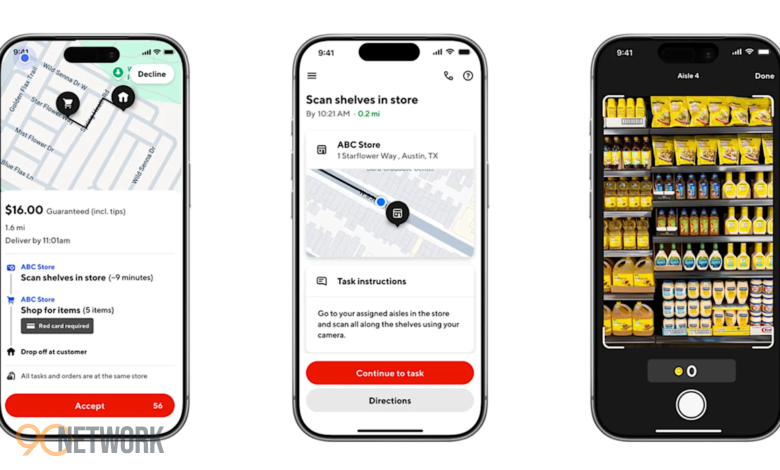
- Scanning store shelves for inventory data
2. Standalone Task Assignments
Other jobs are available through a dedicated Tasks app, with no delivery involved.
These tasks can include:
- Filming daily routines or chores
- Recording unscripted conversations in different languages
- Completing guided activities for AI training
Workers are paid per task, with compensation depending on complexity and effort.
Turning Gig Workers Into AI Trainers
This initiative effectively transforms gig workers into a distributed AI training workforce.
Instead of labeling data behind a screen, workers are now:
- Creating the data itself
- Acting as real-world “sensors” for AI systems
- Helping train both software and robotics models
Some tasks are designed specifically for robotics, requiring workers to demonstrate physical actions like handling objects or completing chores.
This kind of data is especially valuable for teaching machines how to interact with the physical world—something that remains a major challenge in AI development.
A Growing Trend Across the Tech Industry
DoorDash is not alone in exploring this model.
Other companies in the gig economy and tech space have begun experimenting with similar approaches, using distributed workers to:
- Label data
- Test AI systems
- Provide localized insights
This reflects a broader shift toward crowdsourced AI training, where human input remains essential despite advances in automation.
The demand for such data is massive, as companies race to improve AI systems used in:
- Autonomous vehicles
- Delivery logistics
- Smart assistants
- Robotics
Benefits for Gig Workers
For DoorDash couriers, the Tasks platform offers a new way to earn money.
Potential advantages include:
- Flexible income opportunities
Workers can complete tasks during downtime between deliveries. - Variety of work
Tasks differ from traditional delivery jobs, offering new types of activities. - Low entry barrier
Most tasks require only a smartphone and basic instructions.
This could make gig work more dynamic and appealing, especially for those looking to diversify their earnings.
Challenges and Concerns
While the concept is innovative, it also raises important questions.
1. Compensation Transparency
Gig work has long faced criticism over unclear or inconsistent pay. Workers may question whether task-based payments fairly reflect the effort required.
2. Data Ownership
Who owns the content created by workers? And how will it be used in the long term?
These concerns are particularly relevant when the data contributes to profitable AI systems.
3. Privacy Issues
Tasks involving video or audio recordings could raise privacy concerns, especially if they involve public or shared spaces.
4. The Nature of Gig Work
This shift blurs the line between physical labor and digital labor, potentially redefining what gig work looks like in the future.
DoorDash’s Bigger AI Strategy
The launch of Tasks is part of a larger push by DoorDash to integrate AI into its operations.
The company already uses artificial intelligence for:
- Route optimization
- Demand forecasting
- Fraud detection
- Personalized recommendations
By investing in data collection, DoorDash is strengthening the foundation of these systems while also exploring new opportunities in AI and robotics.
This suggests a long-term vision where the company evolves into a technology-driven logistics platform.
What This Means for the Future of Work
DoorDash’s move signals a significant shift in how work is structured in the digital age.
We are seeing the emergence of a new category:
“Data labor”
In this model:
- Workers are paid to generate data rather than just perform services
- Everyday activities become valuable training material for AI
- Gig platforms act as intermediaries between workers and AI systems
This could reshape industries far beyond delivery services.
Real-World Examples of Tasks
To better understand how this works, consider some real assignments:
- Filming yourself loading a dishwasher step-by-step
- Recording a conversation in Spanish to help train language models
- Taking photos of grocery store aisles for inventory recognition
- Capturing how you organize items at home
While these tasks may seem simple, they provide critical data that helps AI systems learn patterns and behaviors.
Industry Impact: A New Data Economy
The introduction of paid AI training tasks highlights the growing importance of data in the modern economy.
Companies are increasingly competing not just for users—but for high-quality data.
DoorDash’s approach offers several advantages:
- Scalable data collection through an existing workforce
- Cost efficiency compared to traditional methods
- Access to diverse, real-world environments
This could inspire other platforms to adopt similar models, accelerating the growth of the AI data economy.
Final Thoughts
DoorDash’s decision to pay gig workers for creating AI training content marks a major evolution in both the gig economy and artificial intelligence development.
By turning everyday activities into valuable data, the company is redefining what work can look like in a digital, AI-driven world.
For workers, it opens up new income streams—but also raises questions about fairness, privacy, and long-term impact.
For the tech industry, it reinforces a key reality: behind every advanced AI system, there are still humans providing the data that makes it possible.
As this model expands, the relationship between people, platforms, and artificial intelligence will continue to evolve in ways that are only just beginning to take shape.